Posts Tagged ‘Writing Life’
The Author In Autumn
I remember a walk I took at twilight nearly twenty years ago. I was living in Menthon-St.-Bernard, France then, a mountainous region in Haute Savoie on a deep lake. My Best Beloved and I lived in a house a ways up the mountain, perhaps a twenty minute walk up the steep path from Menthon itself…
Read MoreThe Forgiveness Cure

I’m in the midst of editing my new novel, OUR DAILY BREAD, which will be released in the US in September. It’s the story of what happens in a small town when, for generations, certain folks have been ostracized, pushed away and left to fend for themselves. Considered Those People—beyond the pale, beyond redemption—they become…
Read More10 Hard truths about writing
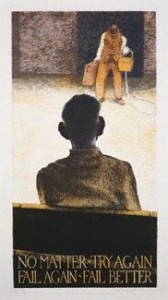
Recently, a student told me she was too scatterbrained to write her novel without help, and that she needed someone to crack the whip, set deadlines, help her focus, etc. She said she needed an editor or a partner, or both. This isn’t the first time I’ve heard that sort of thing from writing students.…
Read MoreThe river of stories
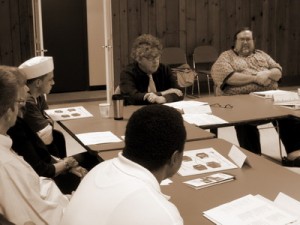
The other day I visited the Rescue Mission of Trenton, with the group, People & Stories, to talk about literature and life. Diane, a volunteer organizer drove me there. When we arrived we entered an unmarked steel door in the side of a cement block building and when the woman behind the glass saw us,…
Read MoreSHARPENING THE QUILL WORKSHOPS
I am thrilled to announce I’ve begun creative writing workshops in Princeton – last Saturday of every month! I invite you to join us. Although we’re just beginning. We are already a group of friendly, supportive writers — some just starting on the writer’s journey, others already well published. Fiction, memoir, poetry, flash fiction, creative…
Read MoreThe Loneliness of the long distance writer
The other day a young woman asked me what I did for a living. What an interesting question. If I had to live off the money I make from writing, I’d be living in a garden shed. On the other hand, it is through writing that I live. So, in a very real sense, when…
Read MoreFacebook — naked in the public square?

If you read this blog even occasionally, you know how ambivalent I am about social networking. I do it mostly because it’s part of my job, to be honest. It’s not that I don’t want to hear from readers — on the contrary, hearing from readers is one of the things I LOVE about being…
Read MoreYou don't know what you don't know…

This week a friend called me, her tone a bit tightly-wound, and asked if I had a few minutes to talk. My friend is a writer, someone I’ve met only recently, and she’s just published her first book. It’s done pretty well. A few nice reviews, a bit of attention. She should be happy. But…
Read MoreWriting as a butterfly net…

It is necessary to write, if the days are not to slip emptily by. How else, indeed, to clap the net over the butterfly of the moment? For the moment passes, it is forgotten; the mood is gone; life itself is gone. That is where the writer scores over his fellows: he catches the changes…
Read MoreA Simple Life….Beloved
Photo by Ron Davis – Newfoundland A couple of nights ago I watched the tail end of a television show about a serial killer. In this episode the serial killer in question was a goth rock star who had lost himself in his stage persona. At the end of the show a woman’s voice-over quotes…
Read More